
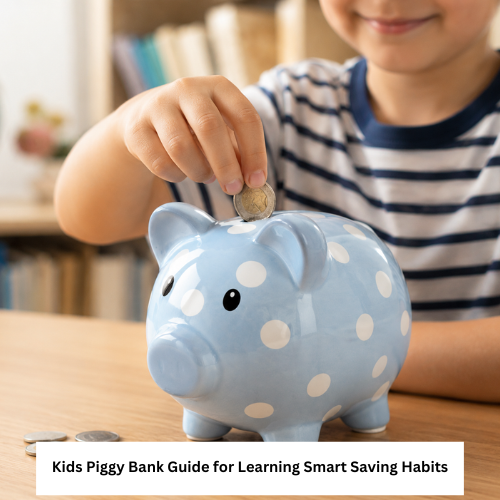
A suitable kids piggy bank should make saving simple without creating unnecessary risks from breakable materials, removable plugs, small accessories, or loose coins. The best design depends on the child’s age, saving goal, ability to count money, bedroom space, and how much adult supervision is available.
A coin bank for children can introduce basic ideas such as waiting, setting a target, tracking progress, and deciding how to divide money between saving and spending. Buyers visiting the piggy store should compare the bank’s construction, capacity, opening method, cleaning needs, and age guidance before choosing.
| Bank type | Best age or use | Main benefit | Possible limitation | What to verify |
| Unbreakable plastic bank | Younger children | Lightweight and less likely to shatter | Can crack or have loose plugs | Plastic quality and stopper |
| Ceramic bank | Supervised use and nursery display | Traditional gift appearance | Breakage risk | Stable placement |
| Clear bank | Goal tracking | Savings remain visible | Clear panel may scratch | Fasteners and material |
| Wooden bank | Older children and display | Decorative and sturdy | Panels or screws may loosen | Finish and hardware |
| Electronic money box | Older children | Interactive counting or locking | Batteries and controls can fail | Battery compartment and age |
| Multi-section savings bank | Save, spend, and share lessons | Supports simple budgeting | More complicated for toddlers | Label clarity and access |
Choose the Right Material
An unbreakable plastic money bank can be more suitable for active young children than a ceramic design, but “unbreakable” should still be verified before buying.
Inspect:
- Molded seams
- Surface cracks
- Bottom plug
- Decorative pieces
- Paint or printed design
- Stability
- Sharp edges
Ceramic may suit a gift or keepsake, but it should remain on a low, protected surface and be handled with an adult.
Wooden banks should have smooth finishes and secure panels.
Coin Access and Stopper Design
A money box for kids should allow coins to be removed without destroying the bank.
Common access methods include:
- Rubber stopper
- Plastic twist cap
- Screw-off base
- Hinged door
- Lock and key
- Electronic code
A pink pig money bank may have a traditional removable opening, but verify the stopper design, material, size, and age guidance.
A stopper that is difficult to remove can frustrate the child. A loose stopper can release coins unexpectedly.
Size and Saving Goals
Choose a capacity that matches the child’s goal.
A smaller bank may work for:
- Weekly coin saving
- A small toy goal
- Counting practice
- First allowance
A larger bank may work for:
- Longer saving periods
- Several coin types
- A family saving challenge
- A birthday-money routine
Do not buy a bank so large that it becomes too heavy for the child when full.
Teaching Save, Spend, and Share
A savings bank for kids works best when parents use a simple routine.
Possible approach:
- Choose one realistic goal.
- Write the goal on a card.
- Add coins at a regular time.
- Count the amount with an adult.
- Record progress.
- Discuss whether to save, spend, or share.
- Celebrate reaching the goal without pressuring the child.
A children money bank can support these conversations when the routine remains short and age-appropriate.
Avoid complicated budgets for preschool children. Focus first on counting, waiting, and making one simple choice.
Piggy Banks for Toddlers
A piggy bank for toddlers needs extra supervision because coins and removable stoppers can be choking risks.
Look for:
- Rounded body
- Wide stable base
- Secure opening
- No loose decorations
- Lightweight construction
- Adult-controlled access
- Simple cleaning
Keep coins out of reach when the bank is not being used with an adult.
Do not allow a toddler to carry a ceramic bank or sleep with any money bank in the bed.
Cute Piggy Bank Gift Ideas
A gift piggy bank can be paired with a small learning activity.
Consider including:
- Starter coins handled by an adult
- Savings chart
- Goal label
- Coin-counting worksheet
- Small pouch for sorting
- Age-appropriate story about saving
A cute piggy bank for children may be suitable as a birthday or holiday gift, but verify the exact dimensions, material, opening, and included accessories.
Personalized banks should be checked carefully before ordering because customized products may have different return rules.
Setup and Storage
Before use:
- Remove packaging.
- Inspect the bank.
- Test the stopper.
- Check for loose parts.
- Wipe it according to instructions.
- Choose a low, stable surface.
- Explain coin safety.
- Store extra coins separately.
- Keep keys or codes with an adult.
A piggy bank product category can help shoppers compare several shapes, materials, and opening styles before choosing.
Common Buying Mistakes
Buying Only by Appearance
A cute piggy bank may still have a weak stopper or unsuitable material.
Ignoring the Child’s Age
Electronic locks, small keys, and breakable materials may not suit toddlers.
Choosing a Bank Without Reusable Access
A bank that must be broken open is less practical for repeated lessons.
Storing It High Up
A filled bank can be heavy and may fall.
Leaving Coins Accessible
Loose coins require appropriate adult supervision.
Forgetting Return Restrictions
Customized, opened, or used products may have limited return options.
Troubleshooting Common Problems
Coins Are Jammed
Use only the approved opening. Do not insert knives or metal tools.
The Stopper Is Missing
Stop using the bank until a compatible replacement is available.
The Bank Cracks
Empty it carefully and discontinue use.
The Lock Does Not Open
Check the instructions, battery condition, code-reset process, and customer support.
The Child Loses Interest
Set a smaller goal or use a visible progress chart.
Cleaning and Maintenance
For plastic banks:
- Wipe with a damp cloth.
- Do not immerse electronic parts.
- Dry before replacing coins.
- Check seams regularly.
For ceramic:
- Dust carefully.
- Inspect for chips.
- Keep away from shelf edges.
- Stop using damaged items.
For wooden banks:
- Avoid soaking.
- Check hinges and screws.
- Follow finish-care instructions.
For electronic banks:
- Secure the battery cover.
- Replace batteries only with adult supervision.
- Remove batteries for long storage when advised.
Warranty, Returns, and Support
Check:
- Return window
- Customized-item exclusions
- Breakage policy
- Electronic warranty
- Replacement key availability
- Replacement stopper availability
- Missing-part procedure
- Delivery tracking
- Seller support
The unbreakable plastic kids savings bank listing can help buyers compare a child-focused plastic design, but verify the current dimensions, age guidance, stopper, materials, seller, and package contents.
Practical Buying Checklist
- Confirm the child’s age.
- Choose a suitable material.
- Check coin-slot width.
- Inspect the withdrawal opening.
- Review small-part safety.
- Confirm capacity and filled weight.
- Choose a stable storage location.
- Plan an age-appropriate savings goal.
- Check cleaning instructions.
- Confirm the kids piggy bank can be reused easily.
- Review electronic or battery requirements.
- Check warranty coverage.
- Read return restrictions.
- Confirm replacement plugs, keys, panels, or battery covers.
- Review delivery and support.
- Verify before buying all unbreakable, educational, personalized, secure, and child-safe claims.
Conclusion
A kids piggy bank should fit the child’s age, saving goal, and level of supervision while remaining stable, reusable, and easy to clean. Compare materials, coin access, small parts, capacity, warranty, replacement support, and return terms before buying.
FAQ
What material is best for a toddler piggy bank?
Lightweight plastic is often more practical than ceramic, but inspect the stopper, seams, and small parts.
Should a piggy bank have a removable stopper?
A reusable opening makes counting and withdrawing savings easier, provided it remains secure.
How can parents teach saving with a piggy bank?
Use one small goal, regular deposits, coin counting, and a simple progress chart.
Are electronic money boxes suitable for young children?
Only when the age guidance, battery compartment, controls, and small parts are appropriate.
How large should a child’s piggy bank be?
Choose enough capacity for the goal without making the filled bank too heavy or difficult to store.
