
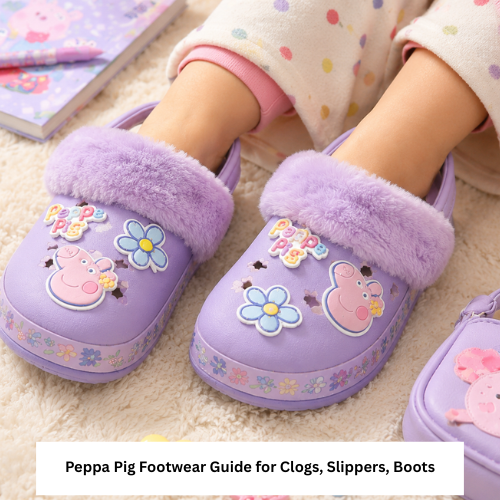
The right Peppa Pig footwear should match the child’s foot length, width, activity, weather, and level of independence when putting shoes on. Character graphics can make footwear appealing, but fit, sole grip, heel security, flexibility, and material quality should guide the purchase.
Peppa Pig shoes may include clogs, slippers, sandals, slip-ons, and rain boots. Each style serves a different purpose, so parents should not use an indoor slipper as an outdoor walking shoe or assume a decorative rain boot provides the same support as everyday footwear.
Shoppers at the piggy store should verify size charts, materials, closure type, sole construction, care guidance, returns, and availability before ordering.
How to Choose Peppa Pig Footwear
Peppa Pig footwear should leave suitable toe room without sliding at the heel.
Measure both feet because one may be slightly larger.
Measure:
- Heel-to-toe length
- Widest part of the foot
- Instep height
- Sock thickness
- Current shoe size
- Space needed for growth
Use the larger foot when selecting the size.
A Peppa Pig footwear collection guide can help buyers compare character shoes for indoor, casual, and wet-weather use.
Size names vary between brands. Always use the current product chart.
| Style | Best use | Main advantage | Possible limitation | What to verify |
| Peppa Pig clogs | Garden, poolside, and quick outdoor use | Easy to put on and rinse | Open heel may feel loose | Heel strap and tread |
| Peppa Pig slippers | Indoor floors and bedtime routines | Soft and warm | Not designed for wet outdoor ground | Sole grip and indoor-use guidance |
| Peppa Pig rain boots | Rain, puddles, and muddy paths | Covers the foot and lower leg | Can feel heavy or warm | Waterproofing and shaft fit |
| Slip-on shoes | Casual daily wear | Easy dressing | Fit must prevent heel movement | Elastic and heel structure |
Measuring a Child’s Feet
Measure near the time of day when the child normally wears shoes, as feet may change slightly during the day.
Simple method:
- Place paper on a hard floor.
- Have the child stand naturally.
- Mark the heel and longest toe.
- Measure the distance.
- Measure the widest area.
- Repeat for the other foot.
- Compare with the product’s size chart.
Do not automatically size up by several sizes for growth. Excess length can cause tripping, sliding, and poor control.
Peppa Pig Clogs
Peppa Pig clogs can work for quick trips, garden use, or casual warm-weather wear when the product is designed for those activities.
A classic Peppa Pig clog may offer an easy-on design, but verify the size range, heel strap, ventilation, sole grip, material, and care instructions.
Check whether the heel strap:
- Holds the foot securely
- Rotates smoothly
- Stays in position
- Does not rub
- Fits over the heel with socks
Clogs should not be used for running, climbing, or activities requiring tightly secured footwear unless the manufacturer specifically allows it.
Peppa Pig Slippers
Slippers should feel secure enough for indoor walking without slipping off at every step.
A Peppa Pig girls slipper can suit indoor use, but buyers should verify the lining, sole material, heel design, size chart, and washing instructions.
Check:
- Non-slip sole pattern
- Heel coverage
- Toe-box space
- Interior seams
- Lining softness
- Floor compatibility
- Washability
A slipper that is too large may rotate or slide. One that is too small may compress the toes.
Avoid using fabric slippers on wet floors or outdoor surfaces.
Fur-Lined Clogs and Slippers
A Peppa Pig fur-lined clog slipper may provide warmth in cooler weather, but the lining can change the internal fit.
Measure with the socks the child will normally wear.
Check:
- Lining thickness
- Removable or fixed lining
- Drying time
- Odor control
- Indoor versus outdoor use
- Heel security
- Cleaning instructions
Do not place lined footwear near direct high heat to dry unless the manufacturer permits it.
Peppa Pig Rain Boots
Peppa Pig rain boots should fit securely around the foot while allowing the child to bend the ankle and walk naturally.
A Peppa Pig waterproof Wellington boot may suit rainy or muddy outings, but verify the current waterproof construction, sole grip, shaft height, handles, lining, and size chart.
Check:
- Foot length
- Boot width
- Shaft circumference
- Shaft height
- Sock thickness
- Pull handles
- Tread
- Lining
- Heel movement
Rain boots should not be so loose that the heel lifts excessively.
The Peppa Pig everyday character footwear listing can help shoppers compare a casual shoe format, but verify the current sizes, materials, closure, sole, seller, and package contents.
Weather and Activity Compatibility
Match the footwear to the environment.
Use slippers for:
- Bedrooms
- Living rooms
- Dry indoor floors
Use clogs for:
- Quick garden trips
- Poolside areas when permitted
- Casual warm-weather use
Use rain boots for:
- Puddles
- Wet grass
- Mud
- Rainy walks
No style should be treated as suitable for every activity.
For playgrounds, long walks, sports, or uneven trails, choose footwear specifically designed for that use.
Sole Grip and Flexibility
Inspect the sole for:
- Tread depth
- Flexible forefoot
- Stable heel
- Smooth edges
- No loose sections
- Even contact with the floor
Very smooth soles may slide on tile, laminate, or wet surfaces.
A thick sole is not automatically safer. The child should still be able to walk naturally without the shoe feeling stiff or heavy.
Closures and Independent Dressing
Young children may prefer:
- Slip-on design
- Heel strap
- Pull handles
- Hook-and-loop straps
- Elastic panels
Closures should remain secure but should not pinch or catch the skin.
Rain-boot handles may make dressing easier, but verify that they are securely attached and not intended for carrying a heavy loaded boot.
Material and Build Quality
Possible materials include:
- Molded foam
- Rubber
- Synthetic uppers
- Textile lining
- Faux fur
- Plastic decorations
- Printed character panels
Inspect:
- Seams
- Adhesive
- Sole attachment
- Printed graphics
- Interior lining
- Decorative pieces
- Pull handles
- Heel straps
- Odor
Verify before buying if material composition, waterproofing, or licensed character branding matters.
Common Buying Mistakes
Ordering by Age Only
Children of the same age can have very different foot sizes and widths.
Buying Too Large for Growth
Oversized shoes can increase tripping and heel movement.
Using Slippers Outdoors
Indoor soles may not provide suitable durability or wet-surface grip.
Assuming Every Rain Boot Is Waterproof
Check construction and product guidance.
Ignoring Sock Thickness
Thick socks can make boots or lined clogs feel much smaller.
Removing Packaging Too Early
Outdoor wear may affect return eligibility.
Troubleshooting Fit Problems
The Heel Slips
Check size, closure, strap position, socks, and whether the style suits the child’s foot shape.
The Toes Touch the Front
Stop use and choose a longer size according to the size chart.
The Shoe Rubs the Ankle
Inspect seams, shaft height, strap placement, and sock coverage.
The Sole Feels Slippery
Stop using the footwear on that surface and review tread and intended-use guidance.
Rain Boots Are Difficult to Remove
Check shaft width, sock thickness, moisture inside the boot, and whether a wider style is needed.
Cleaning and Maintenance
For molded clogs:
- Rinse as directed.
- Use mild cleaning products when approved.
- Air-dry.
- Avoid strong heat.
For slippers:
- Follow machine-wash or spot-clean instructions.
- Dry fully.
- Check the sole after washing.
For rain boots:
- Rinse mud.
- Wipe the lining when permitted.
- Dry upside down or in a ventilated area.
- Avoid radiators and dryers unless approved.
- Inspect for cracks.
Storage and Replacement
Store footwear:
- Clean and dry
- Away from direct heat
- Upright when possible
- With pairs together
- Away from damp floors
- Outside pet reach
Replace footwear when:
- Toes are crowded
- Soles are worn unevenly
- Tread is smooth
- Cracks appear
- Straps break
- Lining bunches
- The child reports discomfort
Warranty, Returns, and Delivery
Before ordering, review:
- Size-exchange terms
- Return window
- Outdoor-wear restrictions
- Defect coverage
- Missing-decoration support
- Sole-separation policy
- Delivery tracking
- Seller response process
- Replacement availability
Inspect the package for crushed shoes, incorrect sizes, missing tags, loose soles, or damaged character graphics.
Conclusion
Peppa Pig footwear should combine a character design the child enjoys with accurate sizing, secure fit, suitable sole grip, and activity-appropriate construction. Measure both feet, compare clogs, slippers, and rain boots carefully, and review cleaning, replacement, warranty, delivery, and return support before buying.
FAQ
How should Peppa Pig shoes fit?
They should provide toe room without excessive heel movement, side pressure, or slipping.
Are Peppa Pig clogs suitable for running?
Clogs are usually better for casual or quick wear. Check the product’s intended activities before use.
Can slippers be worn outdoors?
Only when the manufacturer specifically describes them as suitable for outdoor use.
Should rain boots be bought larger for thick socks?
Measure with the intended socks and use the product size chart rather than automatically sizing up.
How should wet rain boots be dried?
Remove loose water, open the boot, and air-dry away from direct high heat unless the care instructions say otherwise.
